
Essential Fence Maintenance Tips for Longevity and Durability
A sturdy fence adds value, privacy, and security to your property. Yet, many homeowners overlook the importance of regular fence maintenance, which can lead to costly repairs or early replacement. Taking care of your fence not only preserves its appearance but also extends its lifespan significantly. This guide shares five practical tips to help your fence stay strong and attractive for years.

Inspect Your Fence Regularly
Routine inspections catch small problems before they grow. Walk along your fence every few months and look for:
Loose or missing nails and screws
Cracks, splits, or rot in wooden panels
Rust or corrosion on metal parts
Leaning or unstable posts
Signs of insect damage
Early detection allows you to fix issues quickly. For example, tightening loose nails or replacing a single damaged board prevents further weakening. If you spot rust on metal fences, treat it promptly to avoid spreading.
Clean Your Fence to Prevent Damage
Dirt, mold, and mildew can degrade fence materials over time. Cleaning your fence at least once a year helps maintain its condition. Use these methods depending on your fence type:
Wood fences: Use a mild detergent mixed with water and a soft brush to scrub away dirt. Avoid harsh chemicals that can strip protective finishes.
Vinyl fences: A garden hose and soapy water usually suffice. For stubborn stains, a soft cloth or sponge works well.
Metal fences: Remove dirt and rust with a wire brush, then rinse thoroughly.
After cleaning, allow the fence to dry completely before applying any treatments or paint.
Apply Protective Coatings
Protective coatings shield fences from weather damage and pests. For wooden fences, applying a sealant or stain every 2-3 years prevents moisture absorption and wood decay. Choose a product that offers UV protection to reduce fading from sun exposure.
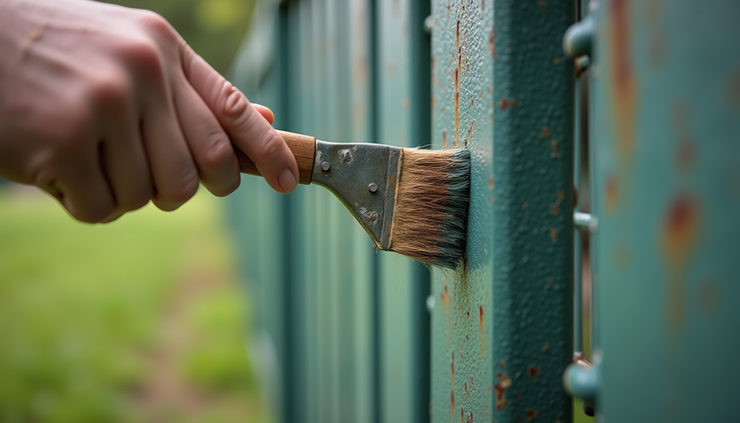
Metal fences benefit from rust-resistant paint or powder coating. This layer stops moisture from corroding the metal. Vinyl fences usually require less maintenance but check for cracks or discoloration and use vinyl-safe cleaners.
Maintain Fence Posts and Foundations
Fence posts bear the structure’s weight, so their stability is crucial. Check posts for signs of rot, rust, or loosening. Posts set in concrete foundations should be inspected for cracks or shifting.
If a post wobbles, reinforce it by tightening brackets or adding concrete around the base. For wooden posts, treat the part buried underground with a wood preservative to prevent rot. Replacing damaged posts promptly avoids compromising the entire fence.
Trim Vegetation Around the Fence
Plants growing too close to your fence can cause damage. Vines, bushes, and tree branches hold moisture against the fence, accelerating rot or rust. Roots may also disturb the fence’s foundation.
Keep a clear space of at least a few inches between your fence and surrounding vegetation. Regularly trim back overhanging branches and remove weeds or grass growing at the base. This practice improves air circulation and reduces moisture buildup.


Comments